

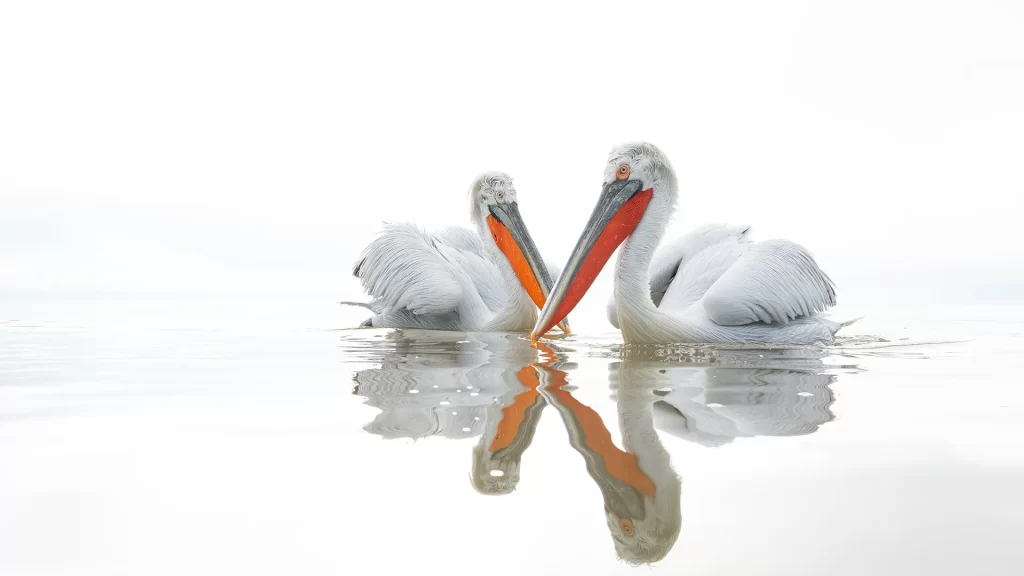
If there is one mistake almost every photographer makes before arriving at Lake Kerkini… it’s packing for distance. Long lenses. Bigger lenses. Even longer lenses.
Because, of course… wildlife means far away, right? Not here. At Kerkini, the reality is different. Sometimes… too different.
The Dalmatian Pelican is not a distant subject. It’s close. Very close. Sometimes so close that your longest lens becomes useless.
And that’s where everything changes.
Most people come prepared to zoom in.
The real challenge here? Learning how to step back. Because when a pelican is right in front of you, close enough to fill the frame, you have a choice: take a tight portrait or tell a story.
Wide lenses allow you to:
And suddenly, the image is no longer just about the bird. It becomes about the place, the light, the moment.
This is where things get fun. Ultrawide lenses at Kerkini are not just for landscapes.
They are for proximity. You can place the pelican close, dominant, powerful, while still keeping the environment: water, mist, mountains, sky
You decide the balance:
Everything works… if you control it. And then there’s the creative side.
Longer exposures in low light. Soft water. Movement. Atmosphere. This is not “classic wildlife photography.” This is experimentation.
If there’s one place where a fisheye makes sense for wildlife… it’s here. At Kerkini, you have a rare opportunity: to be extremely close to a wild bird.
And with that comes freedom.
Will every frame work? No. But when it does… it’s something completely different.
Use it. Test it. Push it.
If I had to choose one range I would never leave behind… it’s this.
24–35mm gives you control.
You still keep context, but now with intention.
Personally? I wouldn’t go out on the water at Kerkini without a 35mm.
Now we start moving closer. This range allows:
Without losing flexibility. A 50mm, for many photographers, becomes the most used lens here.
Why? Because it sits perfectly between environment and subject. Not too wide. Not too tight. Just… natural.
This is where things become very versatile. A 90mm macro, for example, is incredibly useful:
And then comes the classic: 70–200mm
Probably the most reliable lens at Kerkini.
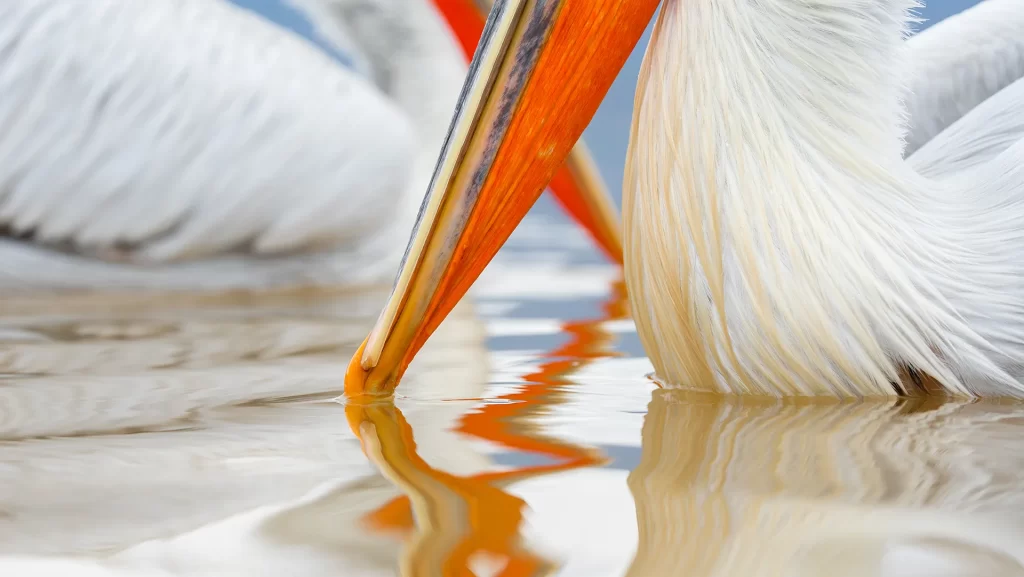
Yes, bring it. But not for pelicans. Let’s be honest:
You don’t need 600mm for a pelican at Kerkini. If you use it, it’s probably because the bird is already too far… or you’re missing better opportunities closer to you.
But long lenses still have a role:
For those moments, having a second body ready with a long lens is perfect.
Just don’t come here thinking this is a “600mm destination.” Because it’s not.
Let’s start with something simple. At Lake Kerkini, your camera brand doesn’t matter. The model doesn’t matter. The generation doesn’t matter.
If you have a camera, bring it. That’s it.
It’s easy to fall into the trap:
Let’s be clear:
The camera you already have is good enough. Because here, the real advantages come from:
This is not extreme, high-speed, impossible wildlife. This is controlled, readable, photographable.
Now, let’s not pretend otherwise. Modern cameras bring serious advantages:
And yes… these features can make your life much easier. If you have access to a newer camera, use it. Don’t ignore that advantage.
Because at Kerkini, those tools help you:
Full-frame cameras shine here, especially in:
You get:
But again: This is a bonus. Not a requirement. APS-C or Micro 4/3 systems can deliver excellent results if used well.
Do you need extreme speed? Not really. Pelicans are:
You have time to:
So while fast burst rates and advanced AF help… they are not what defines your image.
One camera:
But: you will miss moments while changing lenses
Two cameras:
At Lake Kerkini, where distance changes constantly… Two bodies make a real difference.
You’ll deal with:
So what matters more than megapixels? Reliability.
Because when the moment happens… your camera has to work. No excuses.
Yes, better cameras help. A lot. But they don’t replace:
At Lake Kerkini, the opportunity is there for everyone. A modern camera will make things easier. But it will not make the image for you.
There is something many photographers believe in, and they are not wrong. Long lenses isolate the subject from the background.
Yes. Absolutely true. But here’s the problem.
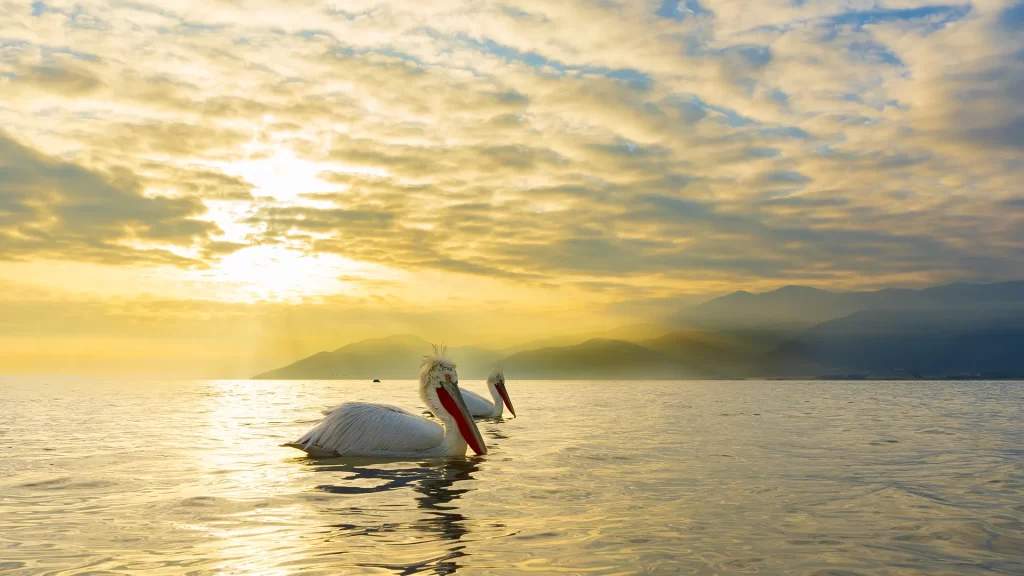
At Lake Kerkini, you have something rare. Something most wildlife destinations simply don’t offer: the possibility to shoot at water level, consistently.
And that changes everything.
Let’s talk about what really happens in the boat.
You lean over the edge. You lower your camera close to the water. Sometimes you don’t even look through the viewfinder.
You compose:
And you shoot. Now try doing that with a heavy telephoto lens.
Now take a different approach. A light setup:
You can:
Sometimes even:
This is not theory. This is how I actually get those low, intimate, water-level shots.
For me, this is essential.
I use:
This allows me to:
Here’s where technology really comes in handy.
When you’re leaning over the boat, holding the camera with one hand, sometimes you cannot control buttons, dials, or manually move the focus point.
In these moments:
In short: at Kerkini, where the birds are so close and you’re often shooting instinctively from the water, this feature is not a luxury, it’s a game-changer.
Yes, telephoto lenses compress and isolate.
But here’s the key: You don’t need a telephoto to separate your subject.
At Kerkini, I often prefer: 50mm – 90mm range, combined with wide aperture
This gives:
Because I can still:
So the real trade-off is not: tele vs wide
It’s: compression vs freedom
At Kerkini, that freedom often leads to better images.
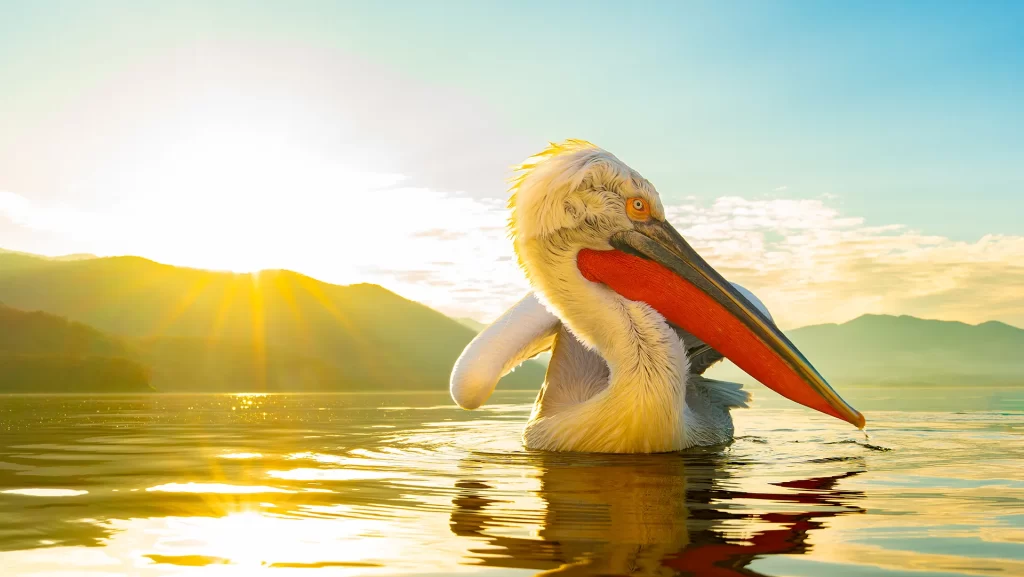
Gear is not just cameras and lenses. At Kerkini, small things make a huge difference.
At Lake Kerkini, gear is not about reach. It’s about perspective.
The biggest mistake you can make here is not bringing enough millimeters. It’s not understanding when to use them.
Now let’s be honest for a second 😄
The classic beginner mistake. You arrive with:
And nothing else. Result?
You spend half the time unable to shoot because your subject is too close. Kerkini is one of the few places where not being wide enough is a real problem.
Some photographers simply refuse. They see the bird close… and still zoom in.
Missing:
If you don’t go wide here, you’re leaving 50% of the opportunity behind.
Moments happen. Distance changes. Light changes.
If you’re stuck thinking “this is a tele shot”… you’ve already missed a wide masterpiece.
Too many lenses. Too much thinking.
Kerkini rewards:
Not gear obsession.
You arrive at Kerkini with two, three… maybe four cameras. You’re leaning over the boat, eyes glued to the water, framing that perfect low-angle shot. And suddenly… reality bites.
And yes: pelican digestive juices are extremely corrosive, capable of eating through metal and plastics over time, but mostly over the fine coating of your front lens. That 600mm lens you brought along? One bad roll off the bench and it could end up either soaked, ruined, or both.
Backpacks and Waterproofing – Don’t Be Fooled by Marketing
Ah, the classic “waterproof camera backpack.” The ads promise:
And yes… the fabric might be waterproof.
But here’s the kicker:
On land, walking with a backpack under light rain? Sure, you’re mostly fine. Water will run off the exterior bag, but will not enter the liner
But in a boat? Oh… the story changes.
And yes, I’ve seen it. Sad faces. Expensive gear ruined.
I use a motorcycle bag made from PVC tarpaulin:
It fits all cameras + lenses, keeps everything dry, and is practical for boat work.
Why it works:
Simple. Effective. Life-saving.
Marketing can’t account for Kerkini’s reality: low-angle shooting, boat movement, splashing pelicans, and unpredictable weather.
Invest in real waterproof protection, not just “waterproof material.” Your cameras will thank you.
At Kerkini, gear safety is not optional. A single lapse:
…can turn a perfect day into a disaster.
The paradox? The gear you don’t use is often the most dangerous. That heavy telephoto? Most likely a boat bench hazard within minutes. Your ultrawide? Stable, ready, lightweight… and capable of producing the shots you actually need.
On the water, simplicity + preparation + awareness beats raw firepower every single time.
Text and photos: Iliuta GOEAN

