

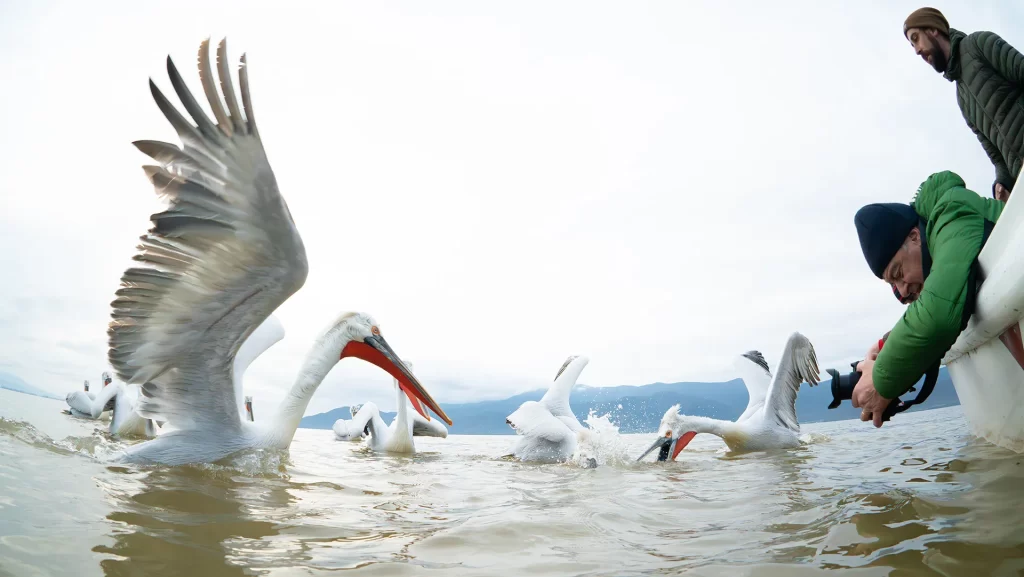
Photography at Lake Kerkini is not just about what you see, it’s about how you see it and capture it. Over the years, I’ve seen photographers arrive with excitement, ready to shoot the “perfect pelican shot,” only to discover that technique, perspective, and patience make the difference between a snapshot and an image that wows.
Kerkini offers two main vantage points:
Reality check: Many photographers see stunning water-level shots online… then try to replicate them standing on a boat deck. Result: awkward, high-angle shots that completely lose the drama of a pelican gliding just above the water. Lesson: get low, stay low, and watch the magic happen.
Shooting low isn’t just aesthetic, it’s transformative:
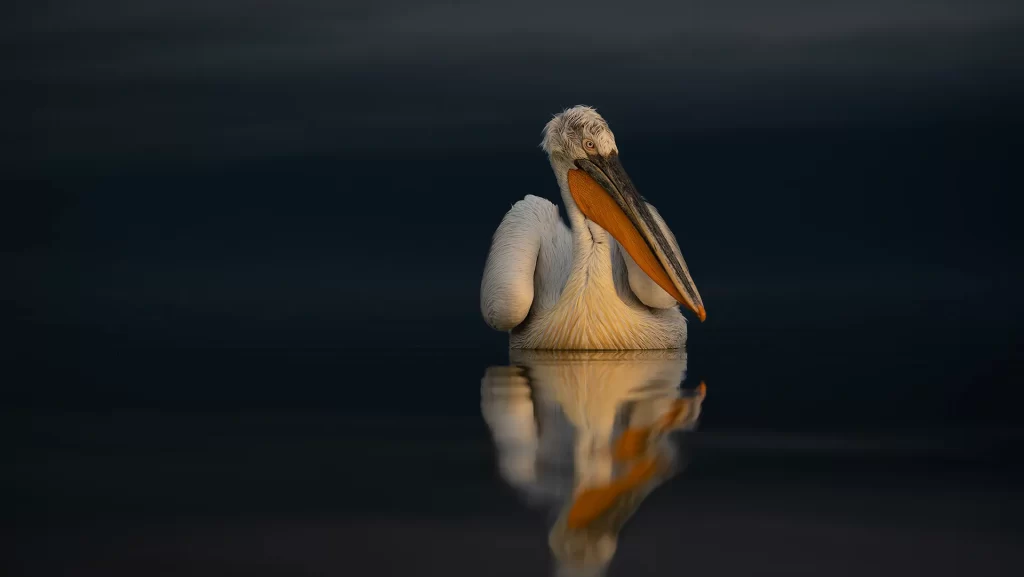
Kerkini’s winter weather is unpredictable: wind, rain, sun, mist, but every element offers photographic potential. Here’s how:
Imagine stepping into your boat before sunrise. A pale curtain of fog floats across the water, partially hiding distant mountains. Pelicans emerge slowly, their bodies outlined in backlight, each movement deliberate. One moment, they’re ghosts in the mist; the next, you catch a glint of red on their pouches as they come closer.
Mist isn’t guaranteed. Sometimes it doesn’t appear. Other times, it transforms a normal morning into a living painting, giving you the chance for minimalist shots, a single pelican, crisp against a soft, white background, every detail of its feathers and expression crystal clear. Exposure makes the mist grey or white… either way, it’s magic.
Windy days at Kerkini are a double-edged sword. The boat rocks, the water ripples, and every photographer’s hands twitch as the frame shifts. But look closer. Pelican head feathers flap in the breeze, wings ripple with motion, and every flight shot becomes dynamic, alive, and cinematic.
No wind? You get a mirror-like lake, perfect for reflections … but the drama? Gone. Calm water lets you think and compose, but windy water gives life to the image. It’s a controlled chaos you can use to your advantage, if you stay low, steady, and patient.
Rain doesn’t ruin photography, it reinvents it. Short showers cast a soft, even light, eliminating harsh shadows on white plumage. Droplets cling to feathers, glinting like diamonds. Grey clouds become a perfect neutral backdrop, emphasizing shapes, movement, and interaction.
Longer rain? Take cover if you must, but know this: some of the most dramatic Kerkini shots come from rain-soaked mornings. A single pelican emerging from the mist with water beading off its wings, it’s cinematic gold.
Ah yes, the sun. How photographers love it. They arrive, full of hope: “I hope tomorrow is sunny!”
Let me save you the disappointment: direct sun at Kerkini is your worst nightmare. White birds, blown highlights, harsh shadows, half-hour of usable light… and then everything turns into a burned, contrast-ridden disaster. If your dream shot is mid-day sun, let me be clear: the lake does not care about your expectations. Mist, haze, soft rain, they will give you images the sun never will.
To those who insist on “perfect sunshine”: prepare for disappointment, frustration, and Instagram posts that look… flat.
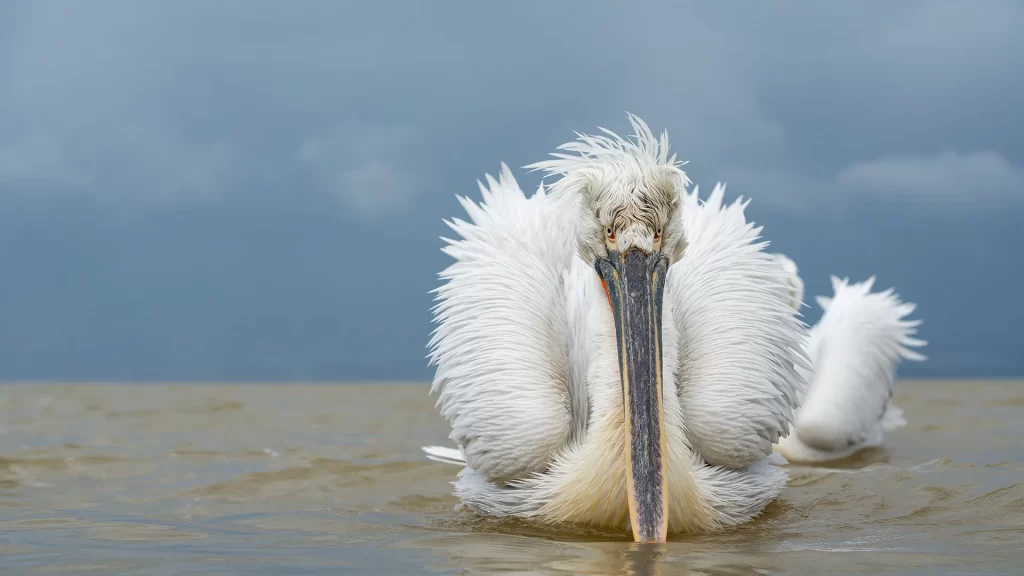
Kerkini sometimes gets associated with “circus” shots: pelicans jumping unnaturally for fish.
We do not promote this as natural behavior.
The real photographic value comes from authentic behaviors, even when fish is provided:
These behaviors are slow, predictable, and composable, giving photographers time to frame, adjust, and perfect the shot.
Many photographers come to Kerkini aiming to replicate iconic compositions: misty reflections, elegant flight, soft light … or circus jumps. Some succeed once… then return standing on decks or high positions, producing uninspired, flat shots.
Here’s the choice:
Both are valid, but low-angle observation, patience, and composition control are non-negotiable.
Unlike many fast-moving species, pelicans are slow and deliberate:
Kerkini is a playground for photographers who understand light, angles, and behavior:
The lake rewards patience, observation, and creativity. Those who embrace the environment and the birds, walk away with images that truly stand out.
Text and photos: Iliuta GOEAN

