The Danube Delta is one of Europe’s last great wild places, a UNESCO Biosphere Reserve where channels, reed beds, and lakes stretch all the way to the Black Sea. But here’s the thing most tourists discover too late: there’s a right way and a very wrong way to experience it. And the wrong way is far more common.
Tulcea is a fine city. So are the villages reachable by car along the Delta’s edges. But if you’re staying in Tulcea or in a road-accessible village, you’re watching the Delta from the outside. You haven’t arrived yet.
The real Danube Delta begins where the roads end. The interior villages like Mila 23, Crișan, Sfântu Gheorghe, Sulina, Caraorman, are accessible only by water. A few family guesthouses, five to ten rooms and that’s the whole village. Some of them serve food prepared the same way it has been for generations. This is where authentic Danube Delta life actually happens.
“If you see a road and cars, you are not in the Danube Delta.”
In the larger, more accessible locations, the tourist infrastructure has grown to match the crowds. You’ll find hotels, restaurants, noise, and very little of what you came here for. It’s a long way to travel for that.
The logic seems reasonable: book your own accommodation in a Delta village, arrange water transport separately, then find a boat and guide on arrival. Simple enough, right?
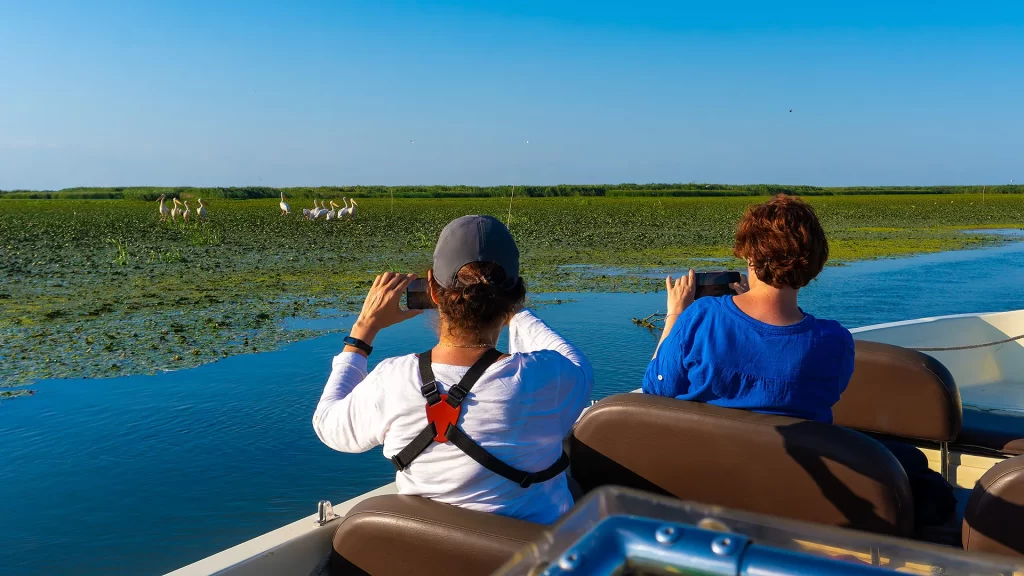
Reaching an interior village means water transport, always on water. There are two ways to get there. A travel agency running proper tours will include the transfer, by open boat, through scenic channels, and already the Delta begins to reveal itself: the smells, the sounds, the birdlife passing close. That’s the good version, and it depends entirely on choosing an operator who uses open boats, not covered ones (which offer you ZERO experience). The other option is the fast transport boat on the main Danube waterway, overcrowded, loud, and over before you’ve noticed anything. Think highway bus, India style. You reach the village. You’ve seen nothing.
Watch out: Around 99% of boats in the Danube Delta are fast, covered craft with tarpaulins and plastic sheeting on the sides. They’ll get you somewhere quickly, but you won’t see, hear, or smell the Delta you came to experience. This is not a minor detail. It changes everything.
The second problem, and this is the one that surprises people most, is what happens when you arrive.
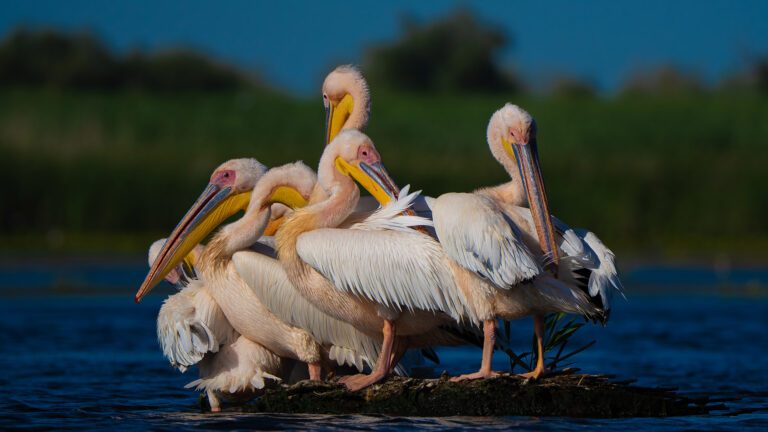
Travelers assume that a remote Delta village will be full of local guides offering their services: knowledgeable, available, ready to take you out at dawn to photograph pelicans or glide quietly through the channels at sunset.
The reality is different. Good guides in the Danube Delta can be counted on the fingers of one hand. They are not waiting for you at the dock. They work with operators who book them in advance, often a season ahead. Arriving and hoping to find quality guiding on the spot is one of the most common, and most disappointing, mistakes Delta visitors make.
What you will find, often, is someone with a fast motorboat willing to take you out for a fee. The price may be high. The experience will almost certainly be: engine noise, speed, wildlife fleeing in every direction, and you back at the guesthouse wondering what happened to your afternoon.
“Good guides in the Danube Delta can be counted on the fingers of one hand.”
At first glance, assembling the Delta experience yourself, accommodation here, transport there, a local boat rental on arrival, seems like it should cost less than booking through an operator who handles everything.
Run the numbers at the end and you’ll often find you paid more. More for last-minute arrangements. More for a fast boat that gave you nothing. More in time lost, energy spent, and missed opportunities that you can’t get back. The pelicans won’t wait while you negotiate at the dock.
Research operators on specialist travel and ecotourism platforms. Check TripAdvisor reviews not just for the accommodation, but for the guided experience itself. A few hours of careful research before you book will determine whether your Delta trip is unforgettable or quietly disappointing.
The Danube Delta rewards the traveler who prepares. There are a handful of operators who do this well, who combine quality accommodation in real Delta villages, open boats, expert guides, and honest pricing. Find one of them. Your trip will be a different thing entirely.
Be smart about it.
……………………………………………………………………………….
Iliuță Goean
The founder of Discover Danube Delta and ILGO Tours, and the founding president of the Association of Professional Guides from the Danube Delta (AGPDD). He has been guiding in the Delta since 2004.